
In the first part of this series, we talked about the importance of a child’s first dental visit and establishing a dental home. In this second part, we focus on one of the most common issues parents face—cavities. With today’s lifestyle, frequent snacking, and easy access to processed foods and drinks, tooth decay has become increasingly common. This FAQ will help you understand why cavities happen and how you can prevent them early.
How Do Cavities Start?
Cavities start when food—especially sticky or sugary foods—stays on the teeth for too long. After your child eats, natural bacteria in the mouth feed on the leftover food. These bacteria produce acids, and when food remains stuck on the teeth for a long time, the acids stay there longer too.
Over time, these acids soften and weaken the outer layer of the tooth (the enamel). If this keeps happening every day, the weakened area eventually turns into a hole—what we call a cavity.
Children are more prone to cavities because their enamel is thinner, and they often snack frequently or don’t clean their teeth well. That’s why brushing twice a day, rinsing after snacks, and avoiding long contact with sugary foods or drinks are so important.
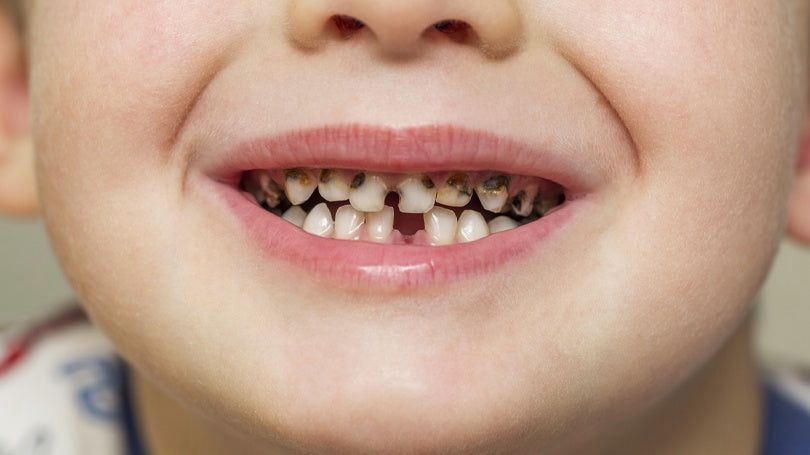
Can Breastfeeding or Bottle-Feeding Cause Cavities in My Child, and What Can I Do to Prevent It?
Nursing bottles and breast milk can cause cavities only when teeth are exposed to them too often or for too long, especially at night. Milk has natural sugars, and when a child sleeps with a bottle or feeds frequently overnight, milk collects around the teeth. With less saliva during sleep, acids stay longer and start damaging enamel.
How to Prevent It:
• Don’t let your child sleep with a bottle (except water).
• If breastfeeding at night, wipe or brush teeth before putting your child back to sleep.
• Brush twice a day with fluoride toothpaste.
• Avoid constant sipping or grazing on milk.
• Move to a cup by 12–18 months.
It’s not the milk—it’s the prolonged contact that causes cavities.
Does My Child Lack Adequate Calcium Which Is Why Teeth Develop Cavities?
It’s both yes and no.
No, cavities don’t usually happen because your child currently lacks calcium. Cavities are mainly caused by bacteria, frequent snacking, and food staying on teeth for too long. Once teeth erupt, their biggest risk factor is exposure to sugars and poor cleaning, not low calcium levels.
Yes, calcium and overall maternal nutrition do play a role—but much earlier. A child’s teeth start forming during pregnancy, and the quality and strength of enamel depend on the nutrients the mother had during that time. If enamel forms weaker, those teeth may be slightly more prone to decay once they appear in the mouth.
However, even strong enamel can get cavities if not cleaned well. Once teeth are in the mouth, daily habits—brushing, diet, and limiting sugar exposure—matter far more than calcium intake.
So while early nutrition affects enamel formation, cavities develop because bacteria and food stay on teeth, not because the child currently lacks calcium.
What Dietary Modifications Can Help Prevent Tooth Decay?
Eating high-fibre foods keeps saliva flowing, which helps create mineral defences against tooth decay. Good sources of fibre are dried fruits such as dates, raisins and figs, and fresh fruits, like bananas, apples and oranges. Not only does saliva wash away food particles and clean your mouth, about 20 minutes after you eat something, saliva begins to neutralize the acids attacking your teeth. Opt for crisp fruits and vegetables like apples, carrots, cucumber etc.
Calcium is a prime ingredient for preventing tooth decay, especially for growing children. Dairy is a great source, with choices such as milk, yogurt and cheese.
Sticky foods such as lollipops, caramels and hard candies — make it difficult for saliva to wash the sugar away. Snacks like biscuits, cakes or other desserts contain a high amount of sugar, which can cause tooth decay. These are best avoided. Fruit is an important part of a healthy diet. Whole fruits have fibre and are a less concentrated source of sugar (and sometimes acids) than juice.
For those on restricted diets, discuss individual dietary needs with the child’s physician.
In summary, preventing cavities comes down to simple daily habits. Brush twice a day with fluoride toothpaste, floss once a day, and rinse or clean your child’s mouth after snacks to avoid food staying on the teeth. Limiting sugary foods and drinks and keeping regular dental checkups also go a long way. With consistent care, you can greatly reduce your child’s risk of tooth decay and help them grow up with a healthy, confident smile.
Specialist Pediatric Dentist at Dr. Sirajudeen Medical Centre.